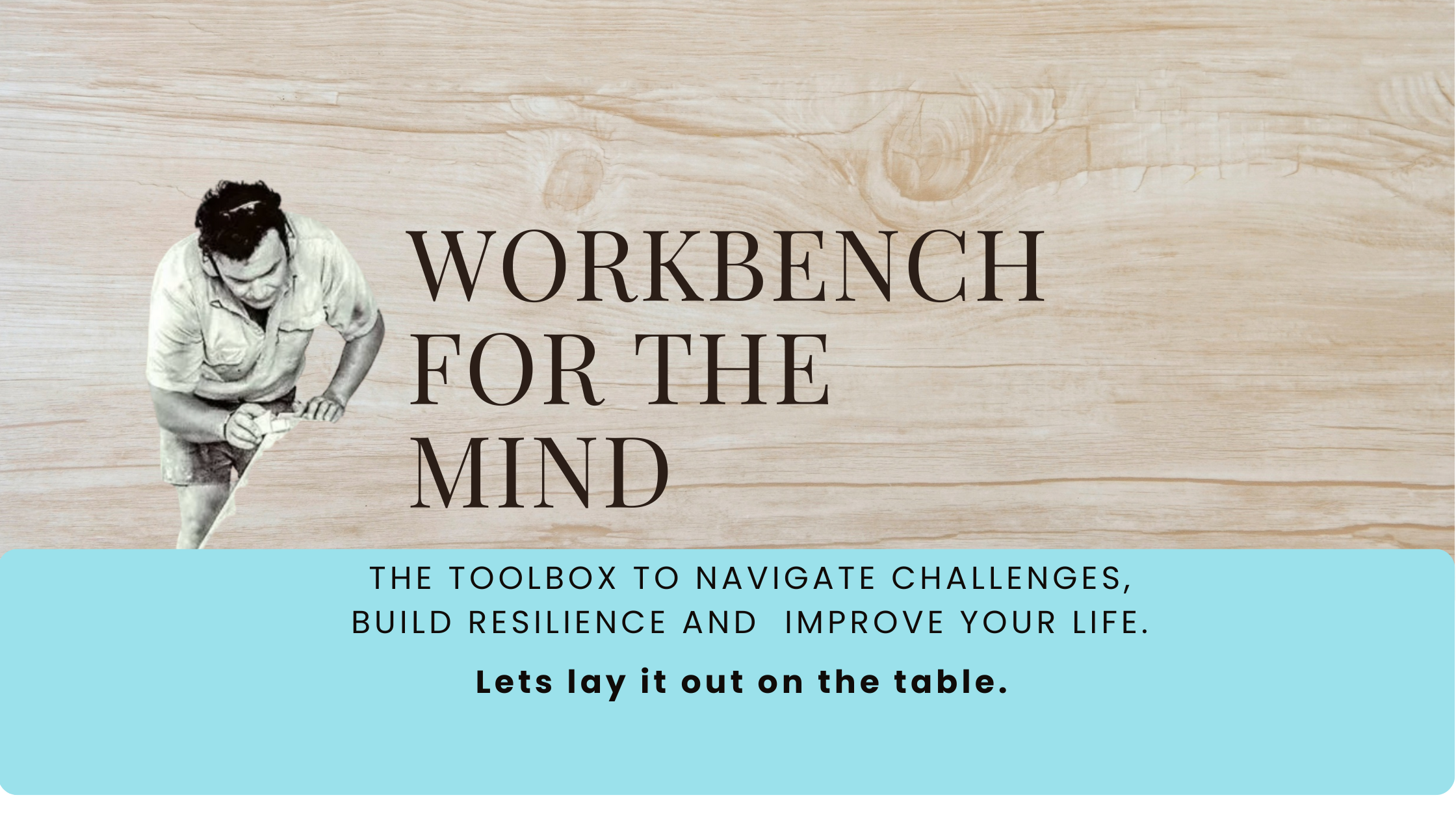
I spent decades pushing through life’s toughest moments—tragedy, grief, and chronic pain—believing I just had to “toughen up.”

I thought that was my only option… or worse, I thought I was going mad or that something was wrong with me for struggling.

It wasn’t until my late 50s that I finally discovered the tools to truly navigate life’s challenges… and I only wish I had found them sooner.

These strategies didn’t erase my struggles, but they gave me the power to function more effectively alongside my grief, pain, and challenges—rather than feeling consumed by them.

What I’ve learned? People don’t need to just "toughen up"—they need practical tools to understand their brain and manage their emotions.

Now, I want to share these powerful tools with YOU.

Introduction to Module 1 on Wellbeing, emphasizing mental health and forming a foundation for mental fitness.
Text on a white background with titles 'Module 2' and 'Optimism.' The paragraph explains how optimism can help shift one's mindset and influence choices and beliefs, especially during overwhelming times.
Text-based graphic with a title 'Module 3 Resilience' and a paragraph about resilience learning strategies.
A white slide with text displaying 'Module 4 Kindness. Kindness starts with YOU. Discover how love, compassion, and self-care can transform your outlook and improve your connection with others.'
Title slide for Module 6 on Emotional Intelligence, discussing how stronger relationships, smarter decisions, and meaningful goals begin with emotional intelligence, and how to connect with feelings and take aligned actions.
Text slide titled 'Module 5 Balance' discussing the WBFTM Balance Wheel to help identify gaps and restore harmony in work-life relationships.
Page titled 'Module 8 Care' with descriptive text about nurturing yourself and others, learning to adapt to life's changes, recover from setbacks, and build supportive relationships.
Text on a white background with black and pink font reading 'Module 7 Neuroscience Understand the brain-body connection to improve decision making and manage emotions more effectively. This module helps you slow down, gain clarity, and approach challenges with confidence.'
Text on a white background with black and pink fonts that reads 'Module 10 Bringing it all together! Our final module brings it all together, equipping you with the tools and mindset to move forward with purpose. Let's lay it all out on the table and take the next step in your journey.'
Text on a white background reading 'Module 9 Hope. Hope is a game-changer for your mental fitness. Learn how it strengthens your confidence, reduces anxiety, and opens the door to new possibilities.'

What we do.

The idea behind ‘Workbench for the Mind’ is to provide a safe, supportive space following the KAIZEN model where people can “change for the better” to uncover their own inner resources or workbench that can be used to improve their wellbeing

These step skills are based on KAIZEN principals to improve quality of life by making small incremental changes to your daily processes to increase life satisfaction over time.

Research shows us that the positive psychology approach has been clinically proven to lead to increased well-being and reduced depression levels.

  • Lay everything out on your workbench.

  • Understand how the brain works, you can mould your brain (or workbench) through plasticity to change, re-organise and adapt habits and thought patterns.

  • Find out what tools you already have on your workbench.

  • Identify the tools you need to improve your resilience.

  • Help someone else build or set up their workbench - build community, break down cross generation barriers and open up the conversation.

A key pillar of the program is creating conversations between the generations about mental health and building our resilience skills before we get labelled. Nothing will change unless we change our conversation at the pub, at the footy and in the home. Without an open communication dialogue between generations, communities can’t grow or learn from each other. We need action to build on the conversations, take it to the next level.

‘Workbench for the mind’ gives participants the ability to listen, understand, communicate effectively as well as manage their own emotions in positive ways through their emotional workbench.

See what people are saying!
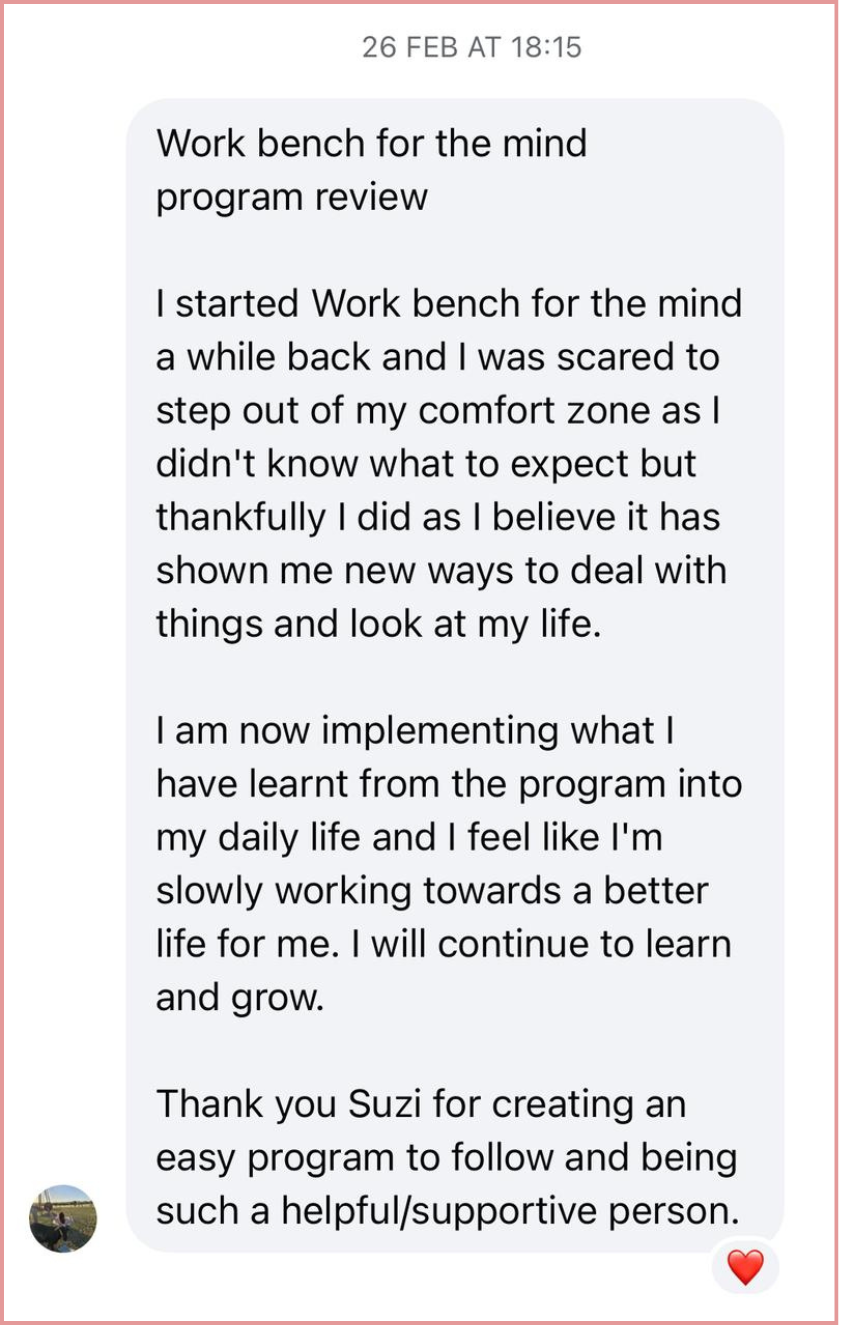
A screenshot of a text message praising a program called 'Work Bench for the Mind.' The message expresses personal growth, overcoming fear, and gratitude to Suzi for creating a helpful program. The message ends with a red heart emoji.
Screenshot of an email from March 2, 2025, at 11:43 AM ACDT, addressed to Suzi Evans, discussing personal and professional growth, mental health support for mothers, and workbench benefits for managing life in outback South Australia.
A woman with blonde hair wearing a light blue top, standing next to a brick wall, smiling, outdoors with a blurred background.

Looking for more information?

Send me an email - and receive a complimentary call!